
As the Centre deals with the fallout of cash shortage in certain parts of the country, Principal Economic Advisor in the finance ministry, Sanjeev Sanyal, bottom, left, tells Arup Roychoudhury that the demand for cash has seen a spike of late.

The fiscal deficit rose primarily on the back of lower non-tax revenues, which came in at 60 per cent of full-year target, compared with 62.4 per cent for the same period last year.

FPIs are currently capped at 5 per cent of the total outstanding government dated securities, and own 4.5 per cent

Though this is part of the divestment drive, government's stake in these companies remains 100 per cent even after the buybacks

Arvind Subramanian was appointed CEA in October 2014 and got a year's extension in September 2017

Even existing cases might come under the proposed law, including those of Vijay Mallya, Nirav Modi and Mehul Choski. But, the law would not cover earlier cases.

While the formation of a holding company will not outright privatise State-owned banks, officials believe it will help the Centre deflect criticism arising out of the latest banking scams.
The idea is to monitor centrally sponsored schemes, partly funded schemes, loans, programmes and any other endeavour into which funds are pumped.

This move will enable it to incur higher-than-mandated borrowing, and possibly spending, till the 2024 Lok Sabha election cycle.

This will encompass the sale of Air India, a number of other privatisation initiatives, mergers, initial public offerings, the Centre's two exchange-traded funds, buybacks and offers-for-sale, and even monetisation of land assets.

Accounting for the first Advance Estimates for 2017-18, an additional planned borrowing of Rs 200 billion, the fiscal deficit could come in at 3.35 per cent of GDP.

There have been demands from a section of stakeholders that the long-term capital gains tax on equities be reimposed.

Economists want the government to focus on jobs, farms, and fiscal consolidation. They also favour re-imposition of the long-term capital gains tax on listed securities and mutual funds.

The government had breached its fiscal deficit target given in the Budget for 2017-18 in November itself, touching 112 per cent of the limit.
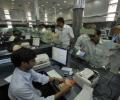
The total quantum of non-performing assets in the Indian banking system increased to Rs 7.33 trillion as of June 2017, from Rs 2.75 trillion in March 2015.

The extra borrowing implies Jaitley will have extra spending space in the Union Budget for FY19, the last full one before the 2019 general election

The economists who signed the letter included Jean Drze , Abhijit Banerjee, Ajit Ranade, Jayati Ghosh, Kirit Parikh, Mihir Shah, Rohini Pande, and Vijay Joshi

BJP's reversals in rural Gujarat has prompted many policy watchers to predict that the Budget would have incentives for the agriculture sector and the rural economy.

The Centre is grappling with the question of its fiscal roadmap not only for this year but for 2018-19

Foreign Trade Policy: More incentives for exports, focus on ease of trading
 © 2025 Rediff.com - Investor Information - Advertise with us - Disclaimer - Privacy Policy - Sitemap - Feedback - About us - Terms of use - Grievances